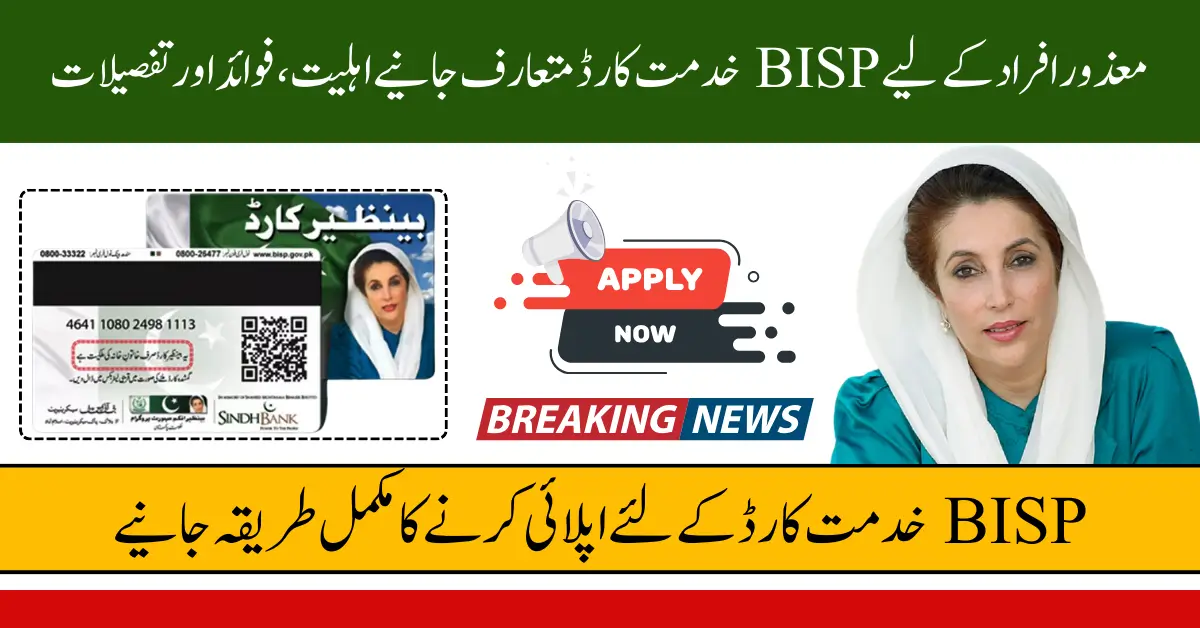
The BISP Khidmat Card is a welfare-focused initiative created to support persons with disabilities by offering structured financial assistance and easier access to government services. This article explains how the program works, who can qualify, what type of support is provided, and what improvements are expected in 2026. Readers will gain a clear understanding of eligibility requirements, verification steps, benefit usage, and practical guidance for a smooth enrollment process.
 Also read
BISP Khidmat Card 2026
This program was designed to reduce financial pressure on households that include persons with disabilities. The goal is not only to provide monetary help but also to create a verified system through which beneficiaries can be recognized across multiple support channels. By linking assistance with official identity verification, the initiative helps minimize delays, duplication, and uncertainty for eligible individuals.
Program Overview
| Category | Details |
| Target Group | Persons with certified disabilities |
| Support Type | Financial and service-based assistance |
| Verification Method | National identity and disability records |
| Payment Access | Secure, scheduled disbursements |
| Review System | Periodic eligibility checks |
| Future Focus | Faster processing and wider inclusion |
Who Can Qualify for Support
Eligibility is based on disability status and financial need. Applicants must hold valid national identification and recognized disability certification issued through authorized medical channels. Household income conditions are reviewed to ensure that support reaches those who need it most. Periodic reviews are part of the system to keep records accurate and benefits fairly distributed.
 Also read
Financial and Social Benefits
The support provided focuses on stability and dignity rather than short-term relief. Beneficiaries receive assistance meant to help manage routine expenses and access essential services without repeated paperwork. Key advantages include:
- Consistent financial assistance delivered through secure methods
- Easier access to health-related and rehabilitation services
- Simplified enrollment for related social welfare programs
How the Application Process Works
The application process is designed to be straightforward. Applicants submit identification details and disability certification through authorized registration points or approved digital methods. Once records are verified, approval decisions are communicated clearly. The system prioritizes accuracy and transparency so applicants know what to expect at each stage.
 Also read
Payment Access and Daily Use
After approval, beneficiaries can access funds through designated payment channels linked to their verified records. Payment schedules are shared in advance to help families plan expenses. Extra care is taken to ensure accessibility for individuals with mobility, hearing, or vision challenges, making the process easier to navigate independently.
Improvements Planned for 2026
Updates planned for 2026 focus on better outreach and smoother administration. Processing times are expected to improve, while complaint-handling mechanisms are being strengthened. Coordination with provincial services is also improving so beneficiaries can receive broader support beyond financial aid alone. These refinements aim to make the BISP Khidmat Card more responsive and inclusive.
 Also read
Guidance for Applicants and Families
Applicants are advised to keep documents updated and follow official instructions carefully. Maintaining correct contact information is important to receive notifications about verification or payment updates. Families supporting persons with disabilities can also assist by ensuring records remain current and complete.
Conclusion
This initiative plays an important role in strengthening social protection for persons with disabilities by combining financial help with system-wide recognition. With clearer procedures, improved accessibility, and planned enhancements for 2026, the program continues to move toward a more dependable and respectful support structure for eligible individuals and their families.
 Also read