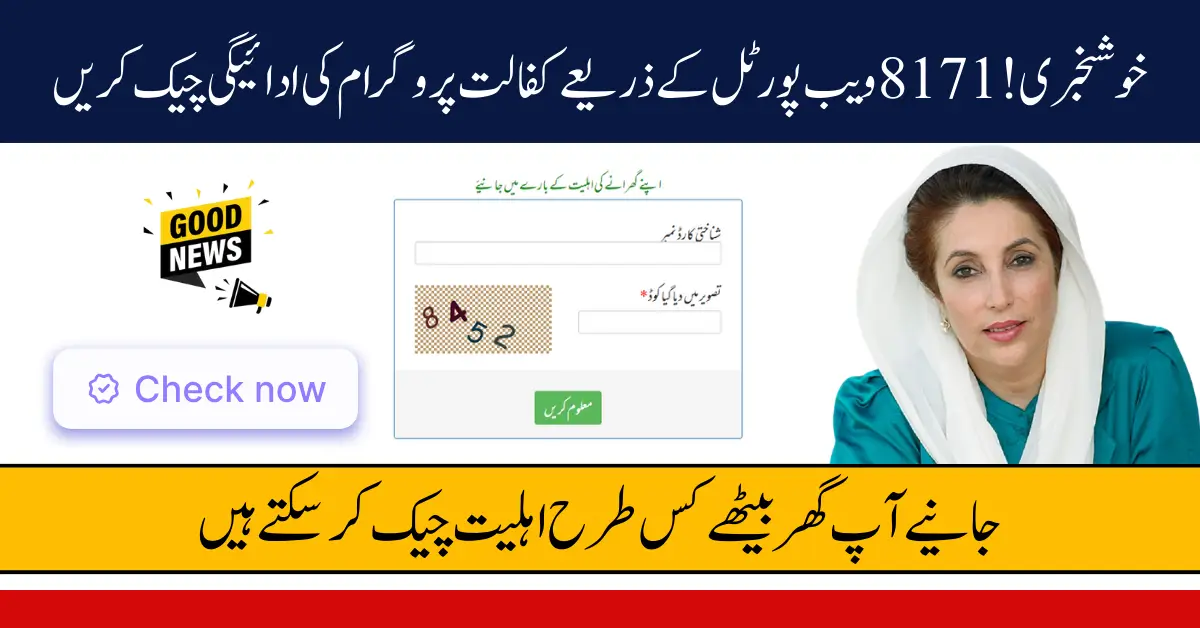
The 8171 Web Portal in 2026 serves as a centralized digital system that helps citizens verify their BISP Kafalat eligibility and confirm the Rs. 13,500 quarterly Qist status. This platform is designed to reduce confusion, minimize physical visits, and ensure that financial assistance reaches deserving families on time. By using a CNIC-based verification process, beneficiaries can easily access accurate information related to their Qist and eligibility.

This article explains how the system works in 2026, who qualifies for the BISP Kafalat program, how to check Qist status, and what steps are necessary to avoid delays. Readers will gain a clear understanding of eligibility rules, Qist collection methods, and common issues faced by applicants.
 Also read
Purpose of the Digital Verification System
The main goal of the online verification system is transparency. It links household survey data with national identity records to ensure fairness in distribution. The improved structure in 2026 focuses on accuracy, faster updates, and mobile accessibility, making it easier for rural and urban users alike.
BISP Kafalat Rs. 13,500 Qist Explained
The Rs. 13,500 amount is provided every quarter to help low-income households manage daily expenses. This support is especially important amid rising living costs. Qist are released in phases, and beneficiaries are informed once their status is approved through official records.
Program Overview
| Category | Details |
| Program Name | BISP Kafalat |
| Year | 2026 |
| Financial Support | Rs. 13,500 |
| Verification Basis | National identity records |
| Qist Cycle | Quarterly |
| Access Mode | Online and mobile-friendly |
| Target Group | Low-income households |
Eligibility Rules for 2026 Applicants
Eligibility depends on socioeconomic conditions rather than recommendations. Families with limited income, no significant assets, and no government employment are prioritized. Female-headed households, widows, and individuals with disabilities receive special consideration under the updated framework.
 Also read
CNIC-Based Status Check Process
Using the 8171 Web Portal, applicants can check their eligibility by entering their CNIC number. The system displays one of three results: eligible, under verification, or not eligible. This real-time response helps families plan without relying on unofficial information.
Reasons Qist May Be Stopped or Delayed
Qist interruptions usually occur due to data issues rather than policy changes. Common reasons include:
- Expired or blocked CNIC
- Incomplete household survey information
- Mismatch between personal data and official records
Qist Collection Options in 2026
Once approved, beneficiaries can collect funds through authorized channels. The method depends on location and verification status and may include biometric points or partner institutions. Identity verification is mandatory before Qist release.
 Also read
Maintaining Eligibility for Future Installments
To continue receiving financial assistance, beneficiaries must keep their information updated and respond to survey notifications. Any major change in income, address, or family structure should be reported to avoid disqualification.
Frequently Asked Questions
Is online status checking safe?
Yes, the system uses official identity records to provide secure and accurate results.
Can eligibility change over time?
Yes, eligibility may change if household data or income status is updated.
What if my status shows under verification?
This means data review is in progress; no action is required unless notified.
Conclusion
The 8171 Web Portal in 2026 plays an essential role in improving access to the BISP Kafalat Rs. 13,500 Qist. By offering a clear eligibility check, secure verification, and timely updates, it ensures that financial support reaches deserving families efficiently. Staying informed and keeping personal data accurate remains the key to uninterrupted assistance.
 Also read